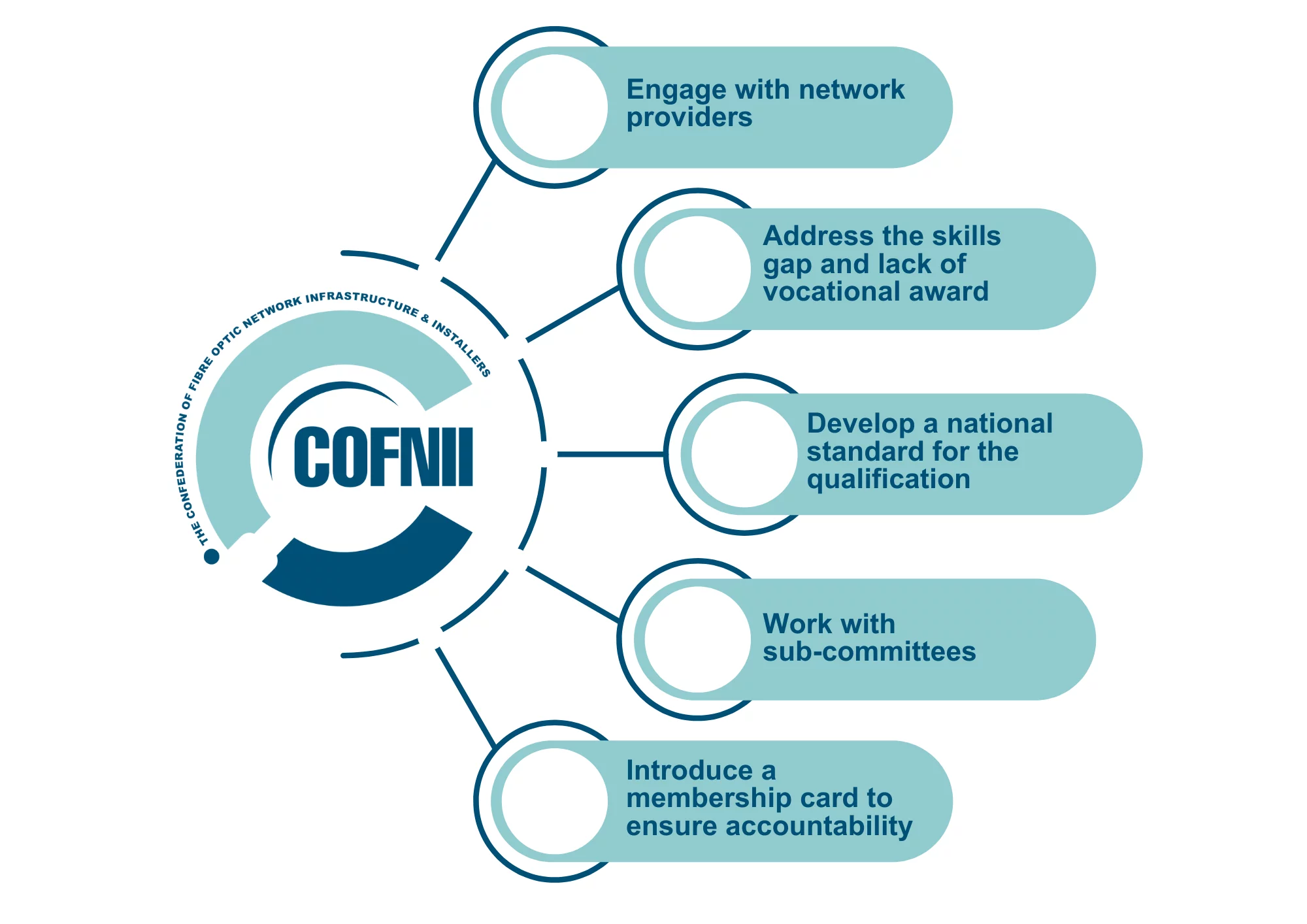
Our trade body has assembled several schemes supporting the IT and Telecommunications infrastructure. We recognise the current training schemes approved by awarding organisations like City & Guilds and NOCN.
The new industry qualification, developed with strong support from the industry and employers, is a testament to our collective commitment to addressing the skills gap.
The purpose of a secure digital skills card is accountability, which is significant when a client raises concerns about the quality of installation practices and standards. It protects all parties involved, but if not corrected, bad working practices could revoke your licence. Many telecom operators are enforcing the scheme as they have now standardised it.
The card schemes, while licensed, have the potential to improve quality control and customer satisfaction significantly. If adopted by the entire industry, they could prevent unqualified installers from working, ensuring that networks are installed to a high standard. Similar successful schemes are already in place in the electrical and gas industries, and we aim to replicate this success in the IT and telecommunications sectors.
The secure Digital ID member card is a mobile app that prohibits screenshots and changes a QR code every 15 seconds. It prevents fraudulent IDs and qualifications, which have been rising for many years.
Qualifications will be checked with the issuing authority to ensure they are genuine before being approved and loaded onto the individual licence; this is to combat fraud.
An installer may be able to appeal the decision if they have proven that any defect work has been corrected. Then, the service provider/end client would decide whether to lift the restriction. If defects continue, they will be permanently revoked.
To become a scheme member, you must select the card type for your chosen profession and then submit your vocational qualifications to be verified or attend an approved course. Below is an overview of the schemes that have been requested. The scheme backs vocational qualifications only. Why?
Vocational qualifications are approved by awarding organisations that meet government standards, like OFQUAL accreditations that don’t meet the exact requirement and hold no vocational value. It pays to have a vocational qualification to further enhance a career path and progression, even when you want to enrol in higher education.
Forster’s deep industry experience plays a pivotal role in his work at Cofnii. He is also the owner and Managing Director of TNS Comms, a trusted contractor, and TNS Europe, a leading training provider. Through these companies, Forster has developed expertise in fibre optics and network cabling, alongside a strong commitment to improving industry standards. His training programmes, developed specifically for Cofnii, are designed to address the skills gap in telecommunications. These courses, expected to gain Ofqual approval by 2025, will set new benchmarks for qualifications in the industry.
Key Contributions
As Chairman of Cofnii, Forster is focused on creating impactful change within the industry. His hands-on experience at TNS Comms and TNS Europe enables him to lead Cofnii’s mission to revolutionise telecommunications infrastructure. His work with the British Standards Institute (BSI), where he contributes to the development of network infrastructure standards through the GEL 86 committee, aligns with Cofnii’s goals to enhance the quality and efficiency of the UK’s fibre optic networks.
Paul Forster’s leadership, dedication to education, and advocacy for industry collaboration are instrumental in shaping the future of telecommunications in the UK, ensuring that the infrastructure keeps pace with the evolving demands of a digital economy.
Sign up for our monthly newsletter and receive industry news